
Why did I choose to apply to Native Camp?
If you’ve spent any time looking for online teaching work on internet or the Global Language Training website, chances are you’ve come across an advert for Native Camp on their TEFL Jobs Board.

If you’re anything like me, you probably saw it and thought, “Hmm… is this something I’d actually want to do?”
For me, the appeal came down to a few key things:
- the flexibility of working from anywhere,
• a clear breakdown of pay based on experience and tutor rank,
• a very accessible hiring process, with detailed demo preparation and solid support,
• and the fact that they don’t require a degree – just strong English skills and a TEFL qualification.
Whether you’re brand new to online teaching or you’ve been around the block a few times, it’s natural to wonder if this could be the right fit for you.
What are the requirements for Native Camp?
Interestingly, despite being a Japanese company, Native Camp does not require a degree. This makes it accessible to a wide range of TEFL-qualified teachers. That said, it’s worth noting that not having a degree can affect your initial earning potential.
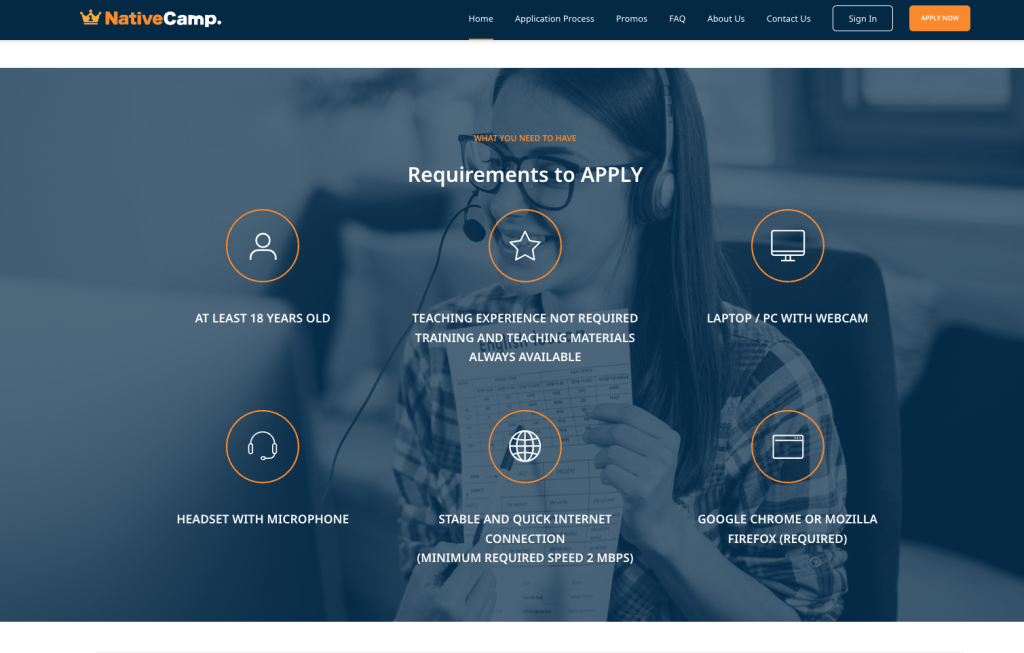 Once your application is accepted, you’re required to complete an English proficiency test. I scored 100% on mine – and honestly, it’s not something most TEFL teachers should struggle with. Your TEFL course should prepare you more than adequately,
Especially if you trained through Global Language Training, which includes a really useful module on Understanding and Teaching English Grammar.
After passing the test, you’ll be asked to complete a demo class. This can be nerve wracking – especially if, like me, you feel a bit anxious teaching on a brand-new platform.
Thankfully, Native Camp provides excellent preparation videos that guide you step-by-step through the demo lesson. You can watch them as many times as you like before doing the real thing. The demo materials themselves are very clear and fully scripted, with the script displayed on-screen during the demo.
Despite all this support, I actually flunked my first demo. I was a little overconfident and didn’t prepare as thoroughly as I should have. The support staff member acting as my student was polite and professional, and I was informed that I could retake the demo after doing more prep.
The second time around, I took it seriously, put in the work, and passed.
Once your profile is live, you can log into the platform and start teaching.
One interesting security feature is that Native Camp uses facial recognition every time you sign in to ensure that only you can access your account. I occasionally struggle with this… mainly because my beard keeps growing..jk…no beard for me!
How much does Native Camp pay?
Payment can be a little tricky to pin down with Native Camp. As much as I’d love to give you a neat, exact figure, earnings really do vary from teacher to teacher.
Native Camp clearly states that base rates differ according to English proficiency and tutor rank. In simple terms: the more experience you have and the higher your tutor ranking, the greater your earning potential – something that experienced teachers will appreciate.
Personally, I earn around $8–$15 per hour. I teach about thirty to forty hours a week on Native Camp, as I also have my freelance guiding and Eco Safari company that needs some attention every now and then.
There’s also a tutor ranking system based largely on student feedback, as well as factors like the number of classes you teach. As your rank increases, so can your earnings, along with performance-based bonuses.
You might not start at the top of the pay scale, but with patience, consistency, and good student engagement, it’s very possible to earn a respectable income.
What benefits does Native Camp offer teachers?
Native Camp advertises “complete flexibility,” which is technically true – but with one important caveat. Because it’s a Japanese company, the majority of students live and work i n Japan. This means peak teaching hours align with Japanese schedules.
If you’re based in South Africa, for example, this can mean a 7 hour time difference
That said, their time-tracking system is excellent. The platform allows you to see your local time and Japan time side-by-side, which makes scheduling much easier.
Other benefits include:
- 100% remote work – teach from anywhere with a reliable internet connection. Native Camp does prefer a simple, distraction-free background
- Fully prepared lesson materials for every class.
• No minimum class requirements. I can personally vouch for this, as my class load has fluctuated without issue.
• Regular incentives and bonuses, which vary month to month.
• Strong online support, with teachers and technicians available when needed. While response times can slow during peak hours or platform-wide issues, support is generally efficient and helpful.
Can teaching online with Native Camp be a full-time job?
It can be – provided you’re willing to work around student availability. There are several performance bonuses available for tutors who meet class-number targets, including a no-missed-sessions bonus if you’re willing to teach seven to eight hours a day.
There’s also a gratuity feature called Appreciation, where students can tip tutors. I wouldn’t count this as reliable income, but it’s a nice extra and an interesting concept. And yes I have received a “tip or two”
Native Camp operates on a bi-monthly payment cycle, and you can choose when to withdraw your earnings.
Does Native Camp assign classes?
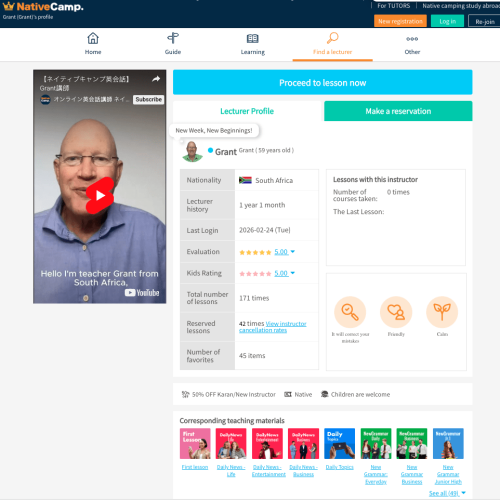
Students select tutors by browsing profiles, which makes it really important to complete your profile thoroughly. I’ve found that my background in business management, combined with my knowledge of sports and tour guiding, attracts a wide range of students — especially professionals and active adult learners. Student demand fluctuates throughout the day, and Native Camp provides clear guidance on the best times to be online. You can open up to 24 sessions per day (12 hours), as each class runs for 30 minutes.
You also have the option to go on standby for “walk-in” or “sudden” students. Availability can be managed by selecting specific time slots in advance. If you do this, classes are automatically assigned to you as students book.
Have I had any tech difficulties with Native Camp?
I haven’t experienced any major technical issues while working with Native Camp. Support staff are readily available, and maintenance schedules are clearly communicated through platform announcements.
When I first started teaching online, investing in an inverter was essential – it gives me 16–24 hours of power, running only my laptop and router.
There are cancellation policies in place for genuine emergencies.
Does Native Camp provide lesson materials?
Yes – Native Camp provides all the lesson materials you’ll need.
When a student enters your class, the lesson they selected appears automatically on screen. While it can be changed at the student’s request, it’s usually followed as-is. The materials are well-structured, clear, fully scripted, and very teacher-friendly. It’s obvious a lot of thought has gone into their development, and I’ve yet to come across any errors
.
How does student feedback work on Native Camp?
Positive student reviews can push you up the tutor rankings and unlock monthly bonuses. Students can also send Appreciation to tutors, usually when they’ve had an especially enjoyable or meaningful lesson.
In my experience, students are a pleasure to teach. I’ve yet to encounter anyone rude or disengaged…okay maybe one!!!. Most students are punctual, motivated, and respectful – likely because they or their parents are paying for lessons and value the time.
Professional Challenges and Concerns
While my personal experience with Native Camp has largely been positive, it would be unfair not to mention some of the concerns raised by other teachers.
Not every tutor’s experience has been smooth. Some teachers have reported dealing with rude or abusive students, including instances of inappropriate behaviour and even sexual harassment. These situations are, thankfully, not the norm … but they do happen.
 A concern shared within teacher communities is that complaints are not always handled with the seriousness or speed one might hope for. Some tutors feel that emails and formal reports can go unanswered, which understandably leads to frustration.
Another sensitive issue is the tutor rating system. Because rankings are heavily influenced by student feedback, negative ratings from disgruntled students can impact a teacher’s profile. Teachers have expressed concern that even when a complaint feels unfair, those ratings are rarely removed. Over time, this can affect visibility on the platform… and potentially and almost always lead to a gradual loss of income.
As with any online platform, it’s important to weigh both the benefits and the potential challenges before committing. My advice? Go in with clear expectations, strong boundaries, and the confidence to advocate for yourself if needed.
Would I recommend teaching on Native Camp?
Yes, I’d say Native Camp is a viable income option for teachers who are willing to put in the effort. Like most online teaching platforms, it can start off a little slow, but once you gain momentum and regular students, the hours (and income) can add up quicker than you might expect.